

ENGAGAMENT SESSIONS
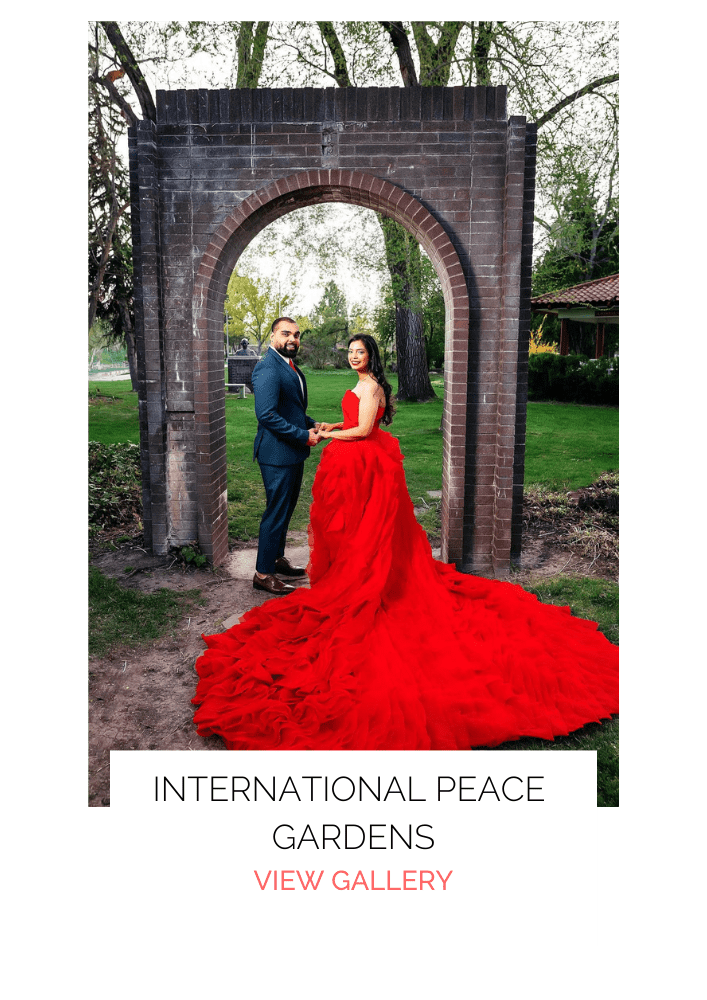
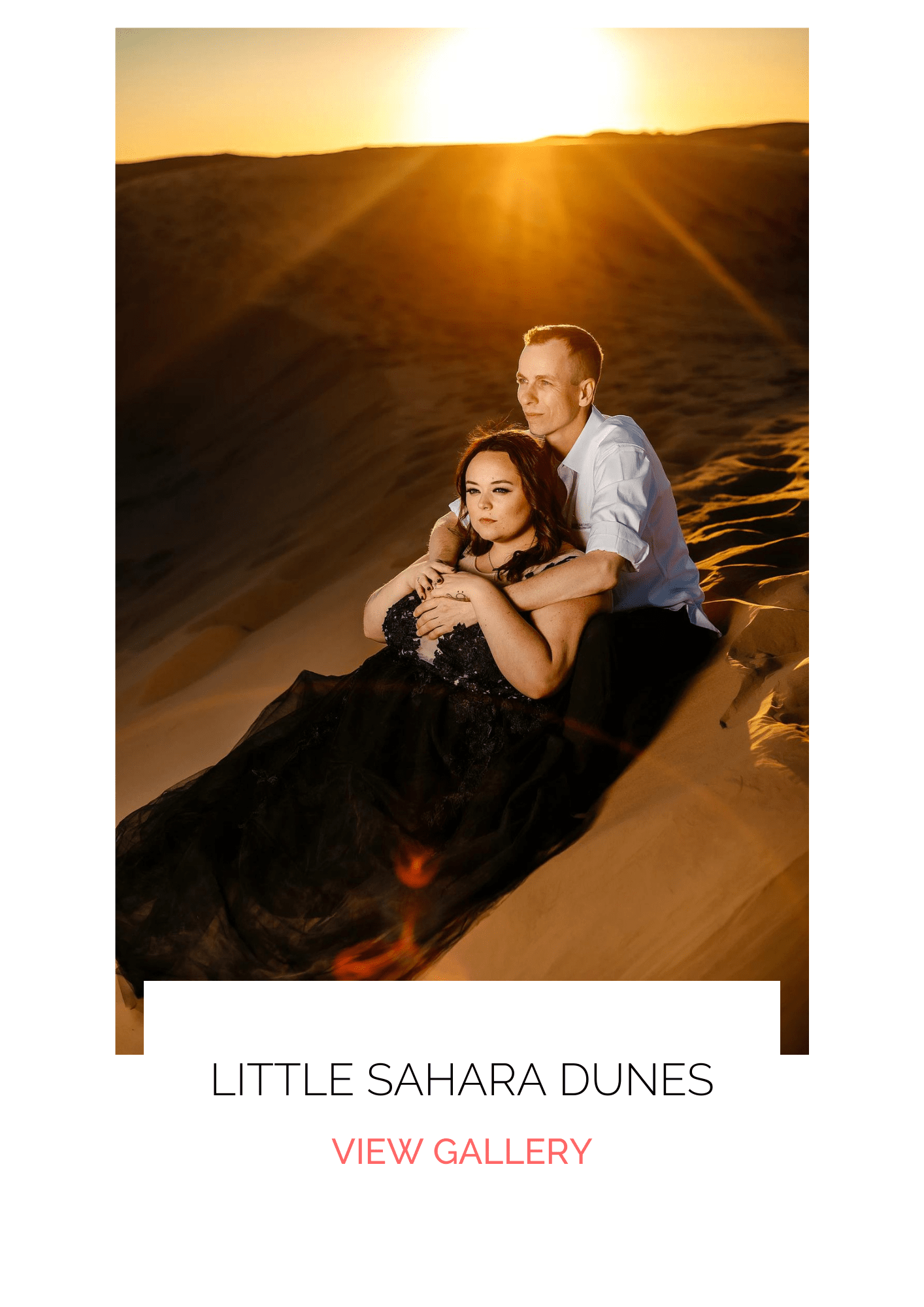
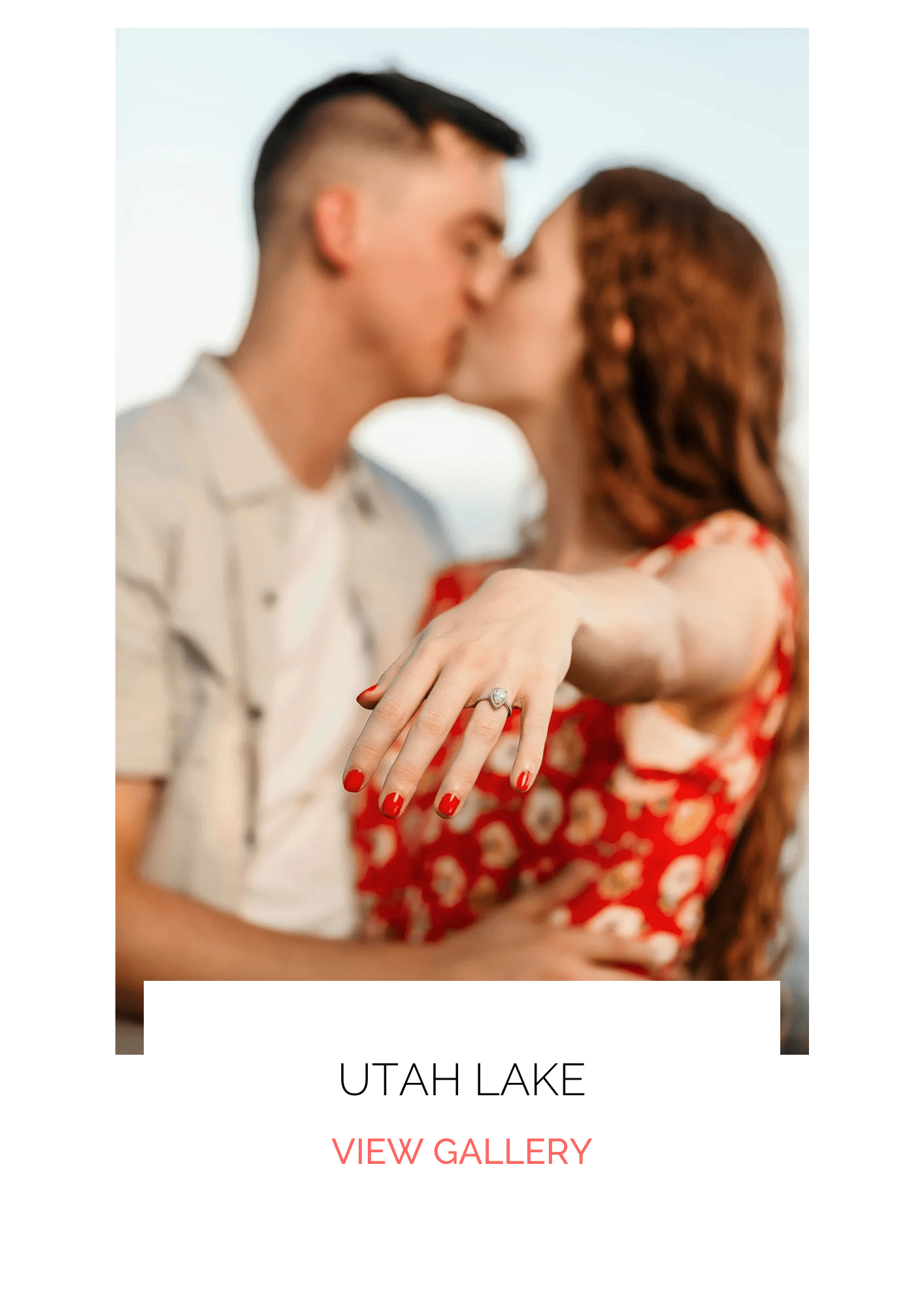
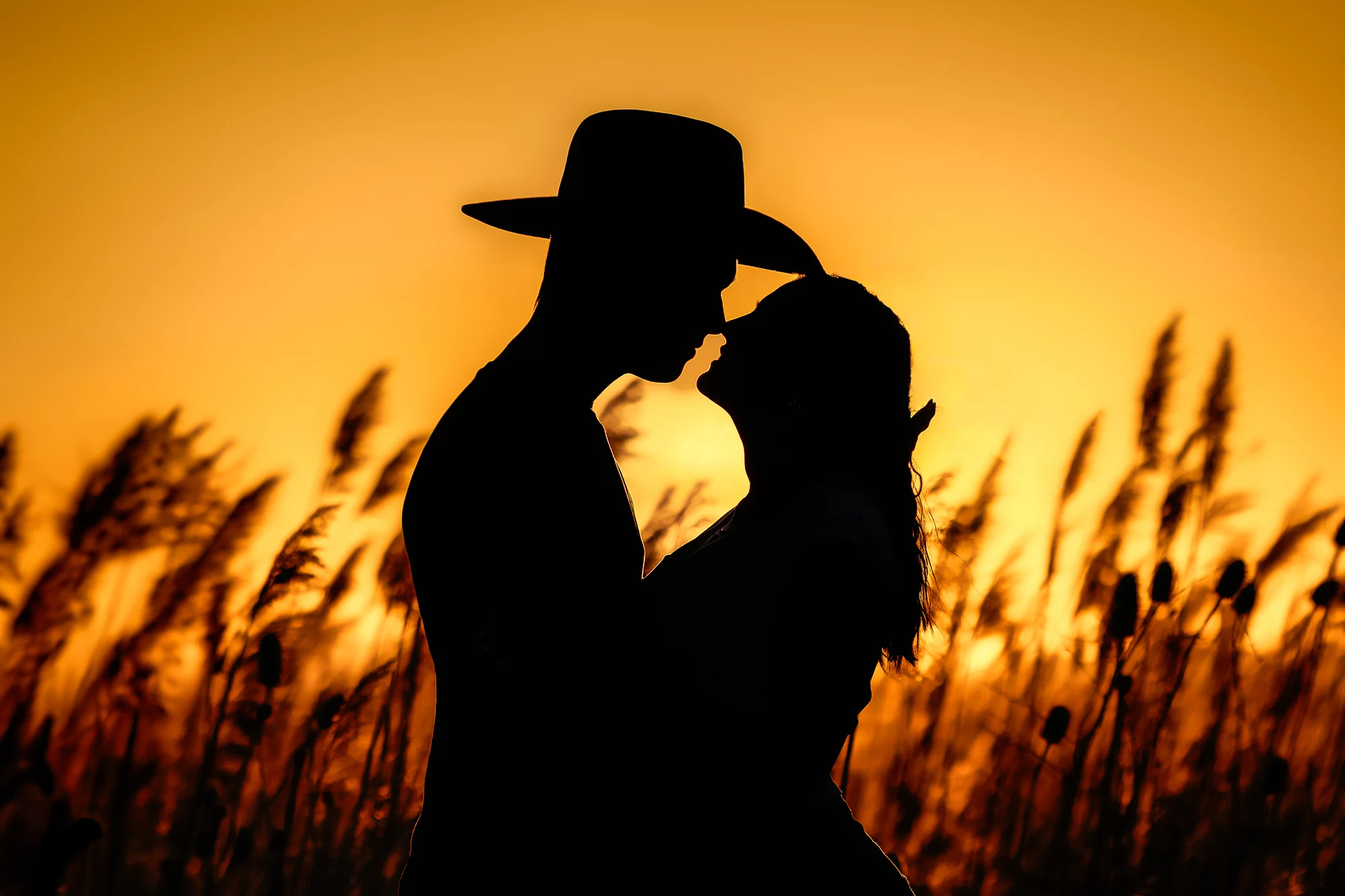
The two of them stood knee-deep in sage, watching a bison cross the gravel road fifty yards ahead, completely unbothered. She started laughing – the kind of laugh that doesn’t perform – and grabbed his arm, and that was the shot. That was the whole session, really. I tell every couple who asks me for engagement photo ideas that the best ones are always found between the moments you planned, not inside them.
I’m a Utah-based photographer with over ten years of experience shooting couples across the American West – from the red rock canyon country of Moab to the alpine meadows above Salt Lake City. In that time, I’ve learned that the couples who enjoy their sessions most are the ones who come in knowing what they want and why. The ideas below aren’t generic. They’re drawn from real sessions, real Utah landscapes, and the practical knowledge of what actually makes photographs feel alive.
Whether you’re planning a golden hour shoot at the Salt Flats or a candid afternoon in your own neighborhood, this guide covers every type of creative engagement photo idea worth knowing – with the location, the look, and the logistics to make it happen.
Golden hour – the 45 to 60 minutes before sunset – produces a light that makes almost any location look extraordinary. The sun drops low, the shadows go long, and that warm amber glow wraps around your faces in a way that no studio light can replicate. This is the foundation of romantic outdoor engagement photos, and for good reason: it’s flattering, forgiving, and genuinely beautiful.
In Utah, golden hour has a particular quality. The iron oxide in the sandstone bounces red-orange light back into the scene, doubling the warmth. You get that effect most powerfully at Dead Horse Point State Park near Moab, at Antelope Island overlooking the Great Salt Lake, and anywhere in Snow Canyon State Park near St. George.
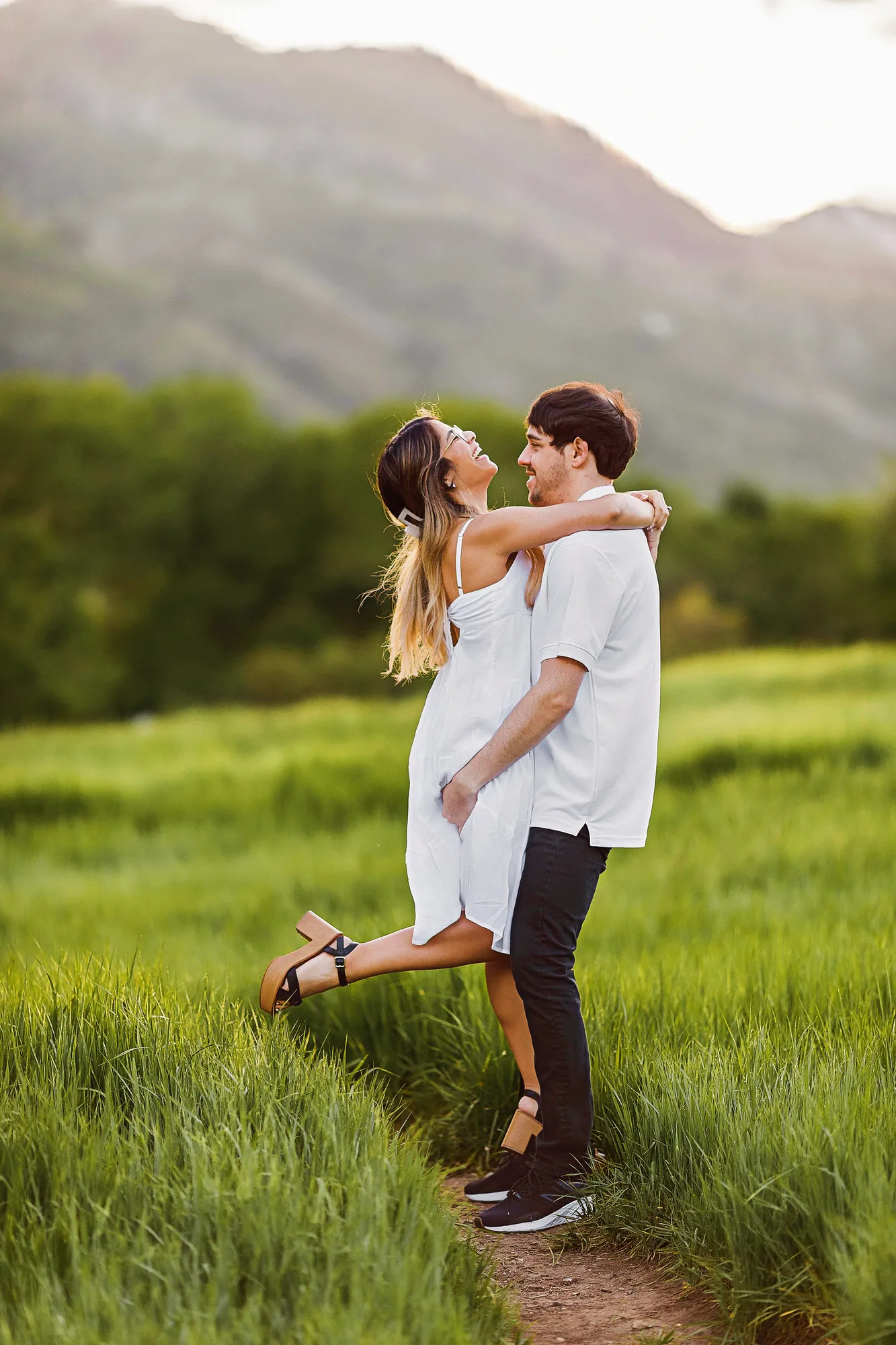
Photographer’s tip: The light moves fast. Arrive at your location 30 minutes before you want to start shooting. Scout your angle in advance – once the golden window opens, you won’t want to spend it figuring out where to stand.
What to wear: Earthy neutrals, rust, cream, or deep burgundy work beautifully in warm-light environments. Avoid white and neon colors, which blow out easily in direct sunlight.

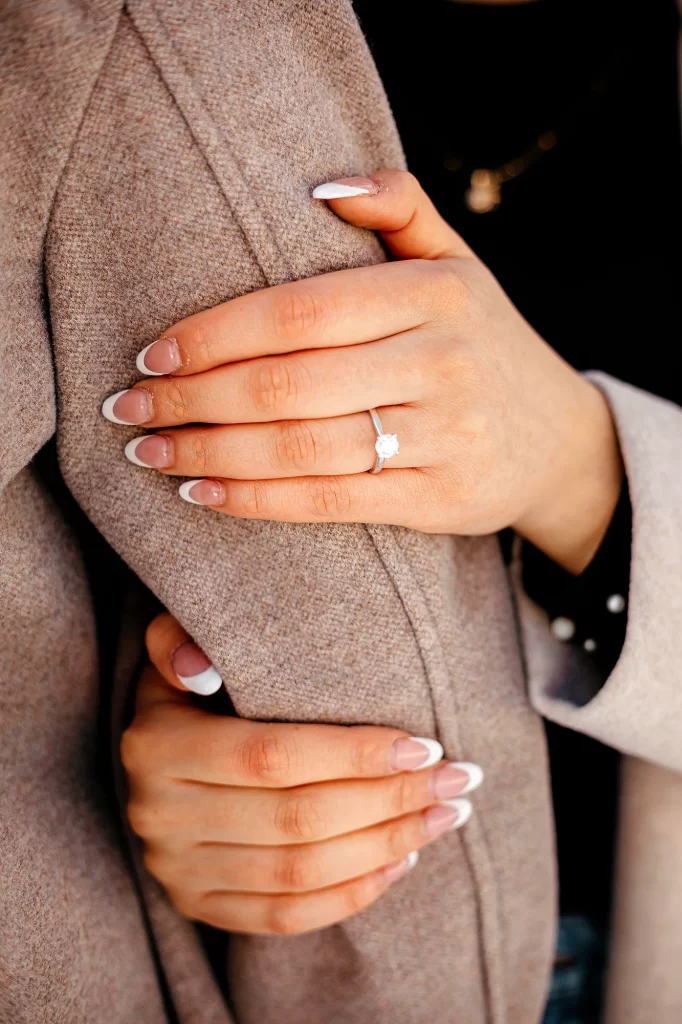

If you love the outdoors, your engagement session should reflect that. Utah’s Wasatch Mountains offer everything from wildflower meadows and alpine lakes to rocky ridgelines and aspen groves, all within an hour of Salt Lake City. One couple I worked with hiked Albion Basin at Alta in early July – the wildflowers were shoulder-high, the air smelled like pine sap and rain, and we spent two hours wandering trails with no plan at all. The photos looked like they belonged in a magazine. They were also completely, unmistakably them.
Adventure engagement photos reward couples who are willing to put in some effort. You don’t need to summit anything – a 15-minute walk from the trailhead often puts you in a scene that looks completely remote. In addition to Albion Basin, Big and Little Cottonwood Canyons are excellent for this style, with Guardsman Pass Overlook offering sweeping views of Park City and the Heber Valley.
Photographer’s tip: Check road closures before you book a mountain session – Albion Basin road is typically accessible from late June through September. For fall sessions, the peak aspen color window is late September to mid-October and books quickly.
What to wear: Layers you can move in. A flannel or linen shirt over a simple base, boots rather than sneakers, and nothing with a complicated fastening that the wind will constantly undo. Avoid matching outfits – coordinate by color palette instead.
No landscape on earth photographs quite like southern Utah’s canyon country. The red and orange sandstone formations, the cloudless blue sky, the scale of everything – Dead Horse Point looking out over the Colorado River gorge makes couples look simultaneously small and heroic, which is exactly the emotional note you want a great engagement photograph to hit.
Arches National Park and Canyonlands are obvious choices, but they require photography permits booked well in advance (the online portal opens 30 days before your date). Dead Horse Point State Park is a more accessible alternative with equally dramatic views. Snow Canyon State Park, near St. George, offers lava fields and red sandstone closer to the southwestern corner of the state.
Photographer’s tip: Moab summer temperatures regularly exceed 100°F. Book your desert session for spring (April–May) or fall (September–October). The light in October in canyon country is some of the most beautiful I’ve ever worked in.
What to wear: Colors that pop against red rock – rich teals, olive, ivory, and warm golden yellow. Avoid red and orange tones that will blend into the landscape. Comfortable, closed-toe footwear – the terrain is rough.

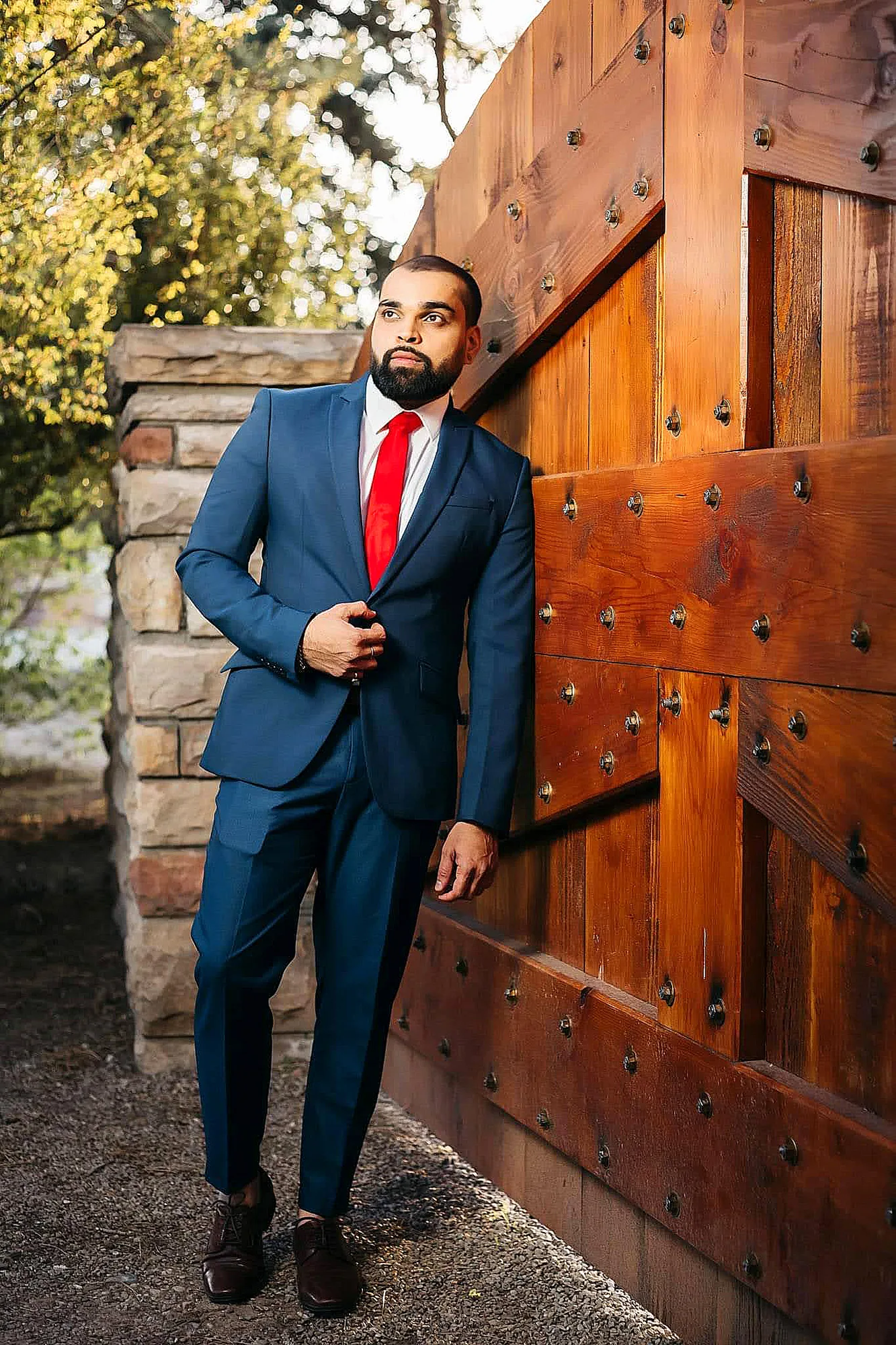

Some couples want greenery and mountains. Others want the grit of a city at dusk, the echo of a parking garage, the clean geometry of a glass-and-steel building. Urban engagement photos are having a serious moment right now, and Salt Lake City delivers more than most people expect – particularly around Exchange Place, the historic warehouse district, and the murals of the Granary Row neighborhood.
The urban approach works especially well for couples who met in a city, live in one, or simply feel more themselves in a built environment than a natural one. It also gives you access to ambient lighting (neon signs, streetlights, restaurant windows) that creates a moody, editorial quality impossible to replicate in daylight.
Photographer’s tip: Schedule an urban session to start around 6 PM in summer – you get natural light for the first hour, then transition into the blue hour and artificial light as the evening drops. That hour between natural and artificial light is magic.
What to wear: Dress up a notch from your everyday. A blazer or a midi dress reads beautifully against industrial textures. Avoid very casual clothing (graphic tees, athletic wear) that fights the surroundings.
The analog aesthetic – whether you shoot on actual 35mm film or achieve it through post-processing – produces a warmth and softness that digital can approximate but never quite match. Grain, slight color shifts, the characteristic glow of film stock: these qualities make photographs feel like memories rather than records, which is exactly what an engagement session should be.
One couple I worked with specifically requested a film shoot at the McPolin Barn in Park City – the classic red-and-white barn set against the Wasatch peaks, shot on medium format film. The session took twice as long as a digital shoot because we had far fewer frames to work with, and that constraint made it better. Every moment we photographed, we meant.
If you want to go this route, ask your photographer specifically about their film capabilities and what stocks they work with. Kodak Portra 400 is the gold standard for warm, skin-flattering couple photography.
Photographer’s tip: Film sessions typically produce fewer images (15–30 finished selects vs. 50–80 from digital). This is a feature, not a bug – every image will be deliberate and genuinely beautiful.
What to wear: Muted, natural tones that complement the vintage quality – camel, sage, cream, faded denim. Avoid highly saturated modern-looking colors that fight the aesthetic.

Your home already knows your story. The coffee cups you reach for without thinking, the way the afternoon light falls through your kitchen window, the dog who insists on being in every photo – none of that exists anywhere else. At-home engagement shoots capture the version of your relationship that your friends never see, and they tend to produce the images that couples end up framing and keeping for decades.
This style works best if you have good natural light in at least one room (even a small apartment often has a window wall that creates beautiful soft light). You don’t need a gorgeous home. You need your home.
Photographer’s tip: Do a light audit of your space a few days before the shoot. Walk through at the same time of day as your planned session and identify which rooms get the best light. Clear out obvious visual clutter – dishes, mail piles – but leave the personal details that make the space yours.
What to wear: Whatever you’d actually wear on a slow Sunday. A soft robe, a linen shirt, bare feet on hardwood floors. This is not the session for formal wear – it’s the session for authenticity.
Utah’s seasons give you four dramatically different backdrops within the same state. Rather than treating the season as a constraint, use it as the entire art direction.
Winter Snow Sessions: Silver Lake at Brighton and Tibble Fork Reservoir in American Fork Canyon are both accessible in winter and offer a quiet, almost otherworldly snow scene. Cold-weather sessions reward couples who bring layers they can remove for shots and go back into between them. The muted color palette of a snowy landscape makes any warm color pop dramatically.
Spring Wildflowers: Albion Basin in early July (late spring by mountain standards) explodes with Indian paintbrush, larkspur, and bluebells. The Mona Lavender Fields near Nephi bloom in the first two weeks of July and require a permit that typically sells out by March – if you want this session, book early.
Fall Foliage: Provo Canyon and the aspens along the Alpine Loop Road hit peak color in the last week of September. The luminous yellow-gold of aspen leaves against a deep blue sky is one of the most photographically rewarding conditions you can shoot in.
Photographer’s tip: Fall foliage is weather-dependent and the window is short – sometimes just 7–10 days. Give your photographer the flexibility to choose the exact date based on conditions rather than locking in weeks in advance.
What to wear for winter: Bold colors against white – a deep red coat, emerald green, navy blue. For fall, lean into the warm palette (mustard, rust, caramel) without disappearing into the leaves. Spring and summer, light and airy – white, lavender, soft blue.
The most powerful engagement photo ideas are usually the most personal ones. The bar where you had your first date. The trail where one of you finally said “I love you.” The coffee shop where you both studied for exams in different booths before you ever spoke. These locations carry a weight that no scenic overlook can replace.
One couple I photographed chose the parking lot of a ski resort in Park City – unglamorous, objectively – because that was where they’d taken a wrong turn on a group trip and ended up alone together for the first time. They were giggling the entire session. The photos looked like joy, because they were joy.
You don’t need a visually stunning location for a meaningful-place shoot to work. Strong light and a genuine connection will carry almost any backdrop. If the light is challenging, we work around it.
Photographer’s tip: Do a location scout with your photographer beforehand if the space is unusual. For indoor locations like restaurants or bars, contact the venue a week ahead – most places are happy to accommodate a brief session during off-hours.
What to wear: Whatever you’d actually wear there. If it’s a hike, dress for hiking. If it’s a restaurant, dress for dinner. Authenticity in clothing supports authenticity in the images.
Not every engagement session needs to feel casual. For couples who love fashion, who have a specific aesthetic vision, or who want images that look like they came out of a Vogue editorial, a styled shoot is the right direction. This approach requires more planning – a mood board, specific wardrobe choices, scouted locations with architectural interest – but it produces images with a distinctly intentional, magazine-quality feel.
The Utah State Capitol building, with its neoclassical columns and panoramic views of Salt Lake Valley, is one of the best architectural backdrop options in the state for this style. The gardens at La Caille restaurant in Sandy and the glass-and-steel geometries of the Salt Lake City Public Library are equally strong.
Photographer’s tip: The more intentional the styling, the more the session depends on coordination with a stylist or at minimum a very clear visual brief shared with your photographer weeks in advance. Pinterest boards are your friend here – build one and share it.
What to wear: Formal, intentional, specific. A structured gown and a tailored suit. Coordinate colors to your location – cool tones for the Capitol’s white marble, warm tones for brick and terracotta. Accessories matter. Hair and makeup at this level should be professional.
A small but growing number of couples are treating their engagement session like a mini elopement – not just photos, but an entire experience. Drive three hours to Zion National Park and spend sunrise on the valley floor. Kayak across Jordanelle Reservoir at golden hour. Rent a cabin near Bryce Canyon and photograph the couple as they explore it for the first time. These sessions run 3–5 hours and cover multiple locations, producing an editorial that tells a whole day’s story rather than a single moment.
Adventure sessions like this are especially well-suited to couples who travel together, hate posed photos, or want their engagement documentation to feel genuinely different from the standard 90-minute session.
Photographer’s tip: Adventure sessions require more planning, more flexibility, and – honestly – more trust between the couple and the photographer. They work best when there’s already a relationship built through an initial consult or prior shoot. Logistics including permits, access fees, and timing need to be sorted weeks in advance.
What to wear: Whatever you’d actually wear on an adventure. Hiking gear is perfectly acceptable. So are flowy dresses over trail runners. The key is that you can genuinely move, walk, and explore without worrying about your clothes.
The American West contains some of the most photographically extraordinary landscapes on the planet, and Utah sits at the center of it. These are the 12 locations I recommend most often – ranked not by fame but by what they actually deliver in a session.
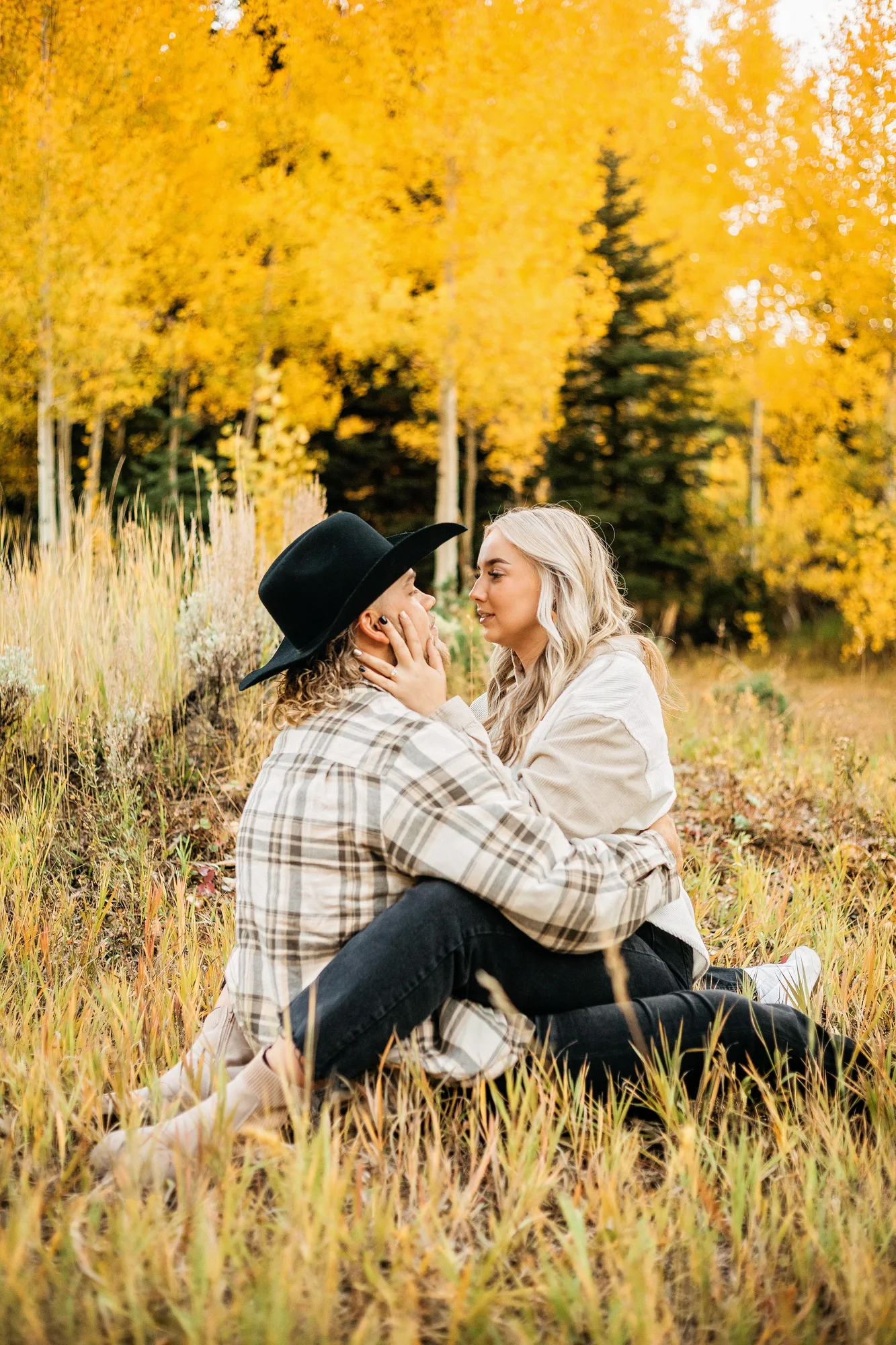
5. Zion National Park, Springdale – Iconic red canyon walls, the Virgin River, and incredible light most of the year. Book your commercial photography permit through the park well in advance. Avoid shuttle season (March–November) for the valley floor if you want any privacy – or embrace it and use the park’s unique visual energy.
6. Big Cottonwood Canyon, Salt Lake City vicinity – 30 minutes from downtown Salt Lake, this canyon delivers seasons in one place: waterfalls in spring, wildflowers in summer, blazing color in fall, and snow in winter. Guardsman Pass Overlook offers sweeping views toward Park City.
7. Provo Canyon and Alpine Loop Road – The aspen groves here hit peak color in late September and are among the most photographed fall foliage in Utah for good reason. The road is closed to vehicles in winter but open for snowshoe access.
8. Snow Canyon State Park, St. George – Red sandstone, lava fields, and sand dunes in a compact, easily navigable park. The light here in fall and winter is exceptional. Requires a photography permit ($25+). Year-round accessibility without the heat limitations of Moab.
9. McPolin Barn, Park City – This iconic red-and-white barn against the Wasatch backdrop is one of the most-photographed landmarks in the state. Free to access from the adjacent road. Best in fall against golden grass and snowcapped peaks, or in winter with snow.
10. Mona Lavender Fields, Nephi – A working lavender farm that opens for photography during its two-week bloom window in early July. Permits required and typically sell out by March. The resulting images – purple rows stretching toward Utah mountains – are unlike anything else in the state.
11. Arches National Park, Moab – The most iconic Utah landscape photography location. Delicate Arch requires a moderate hike; the Windows section is more accessible. Commercial photography permits are mandatory, sold through recreation.gov, and competition is intense. Plan 3–6 months ahead.
12. Exchange Place Historic District, Salt Lake City – For urban couples, this cluster of early-20th-century commercial buildings in downtown SLC provides beautiful architectural texture and reflected light. Free access. Pairs beautifully with a blue-hour session extending into neighboring Pioneer Park.
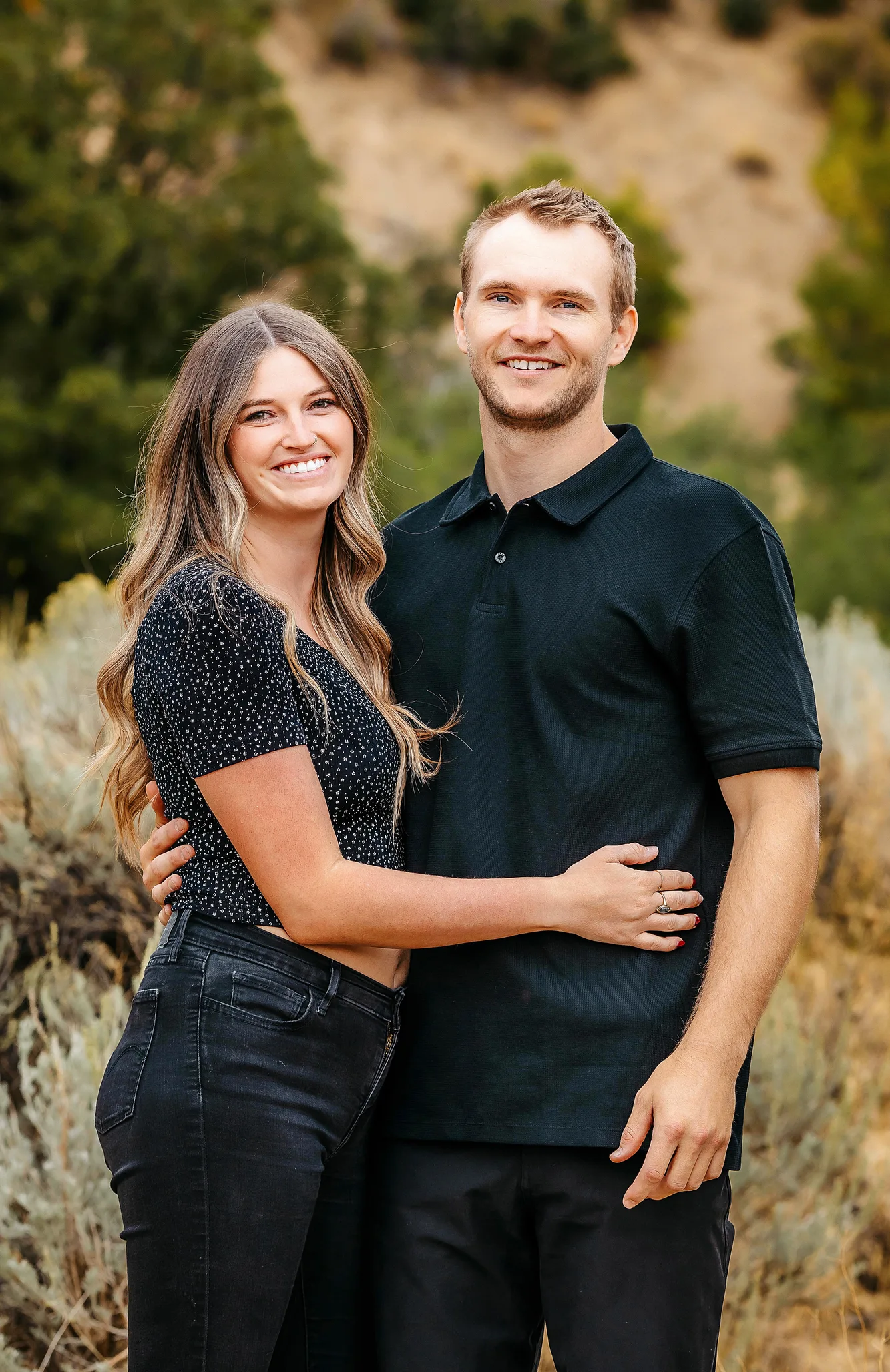
The engagement photography landscape has shifted noticeably in the past 18 months. Here are the eight trends shaping what couples are choosing – and why they work.
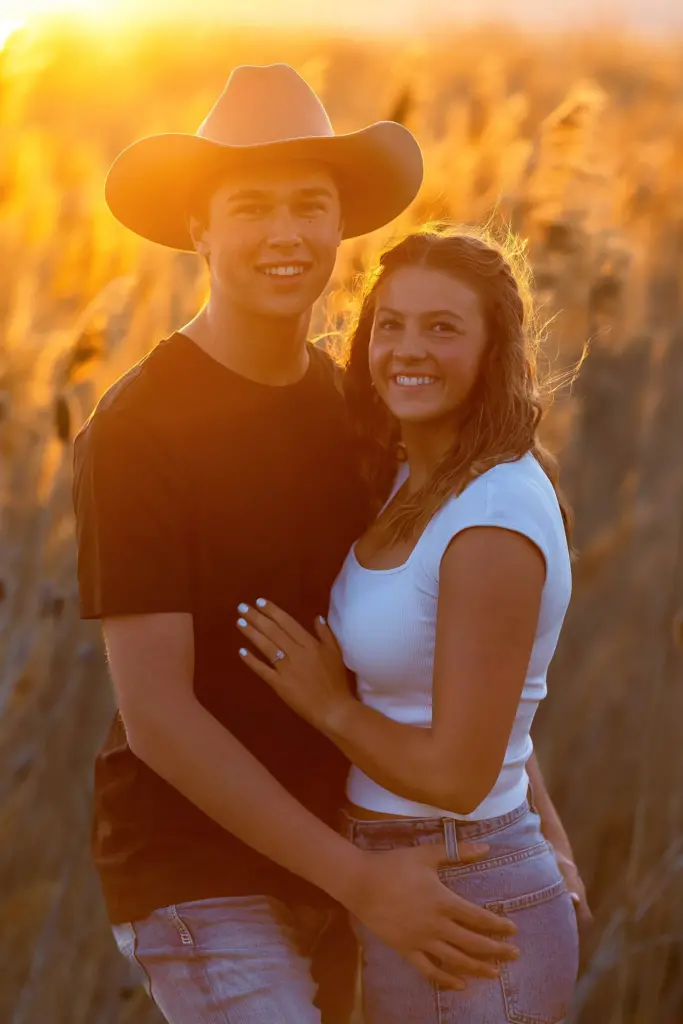
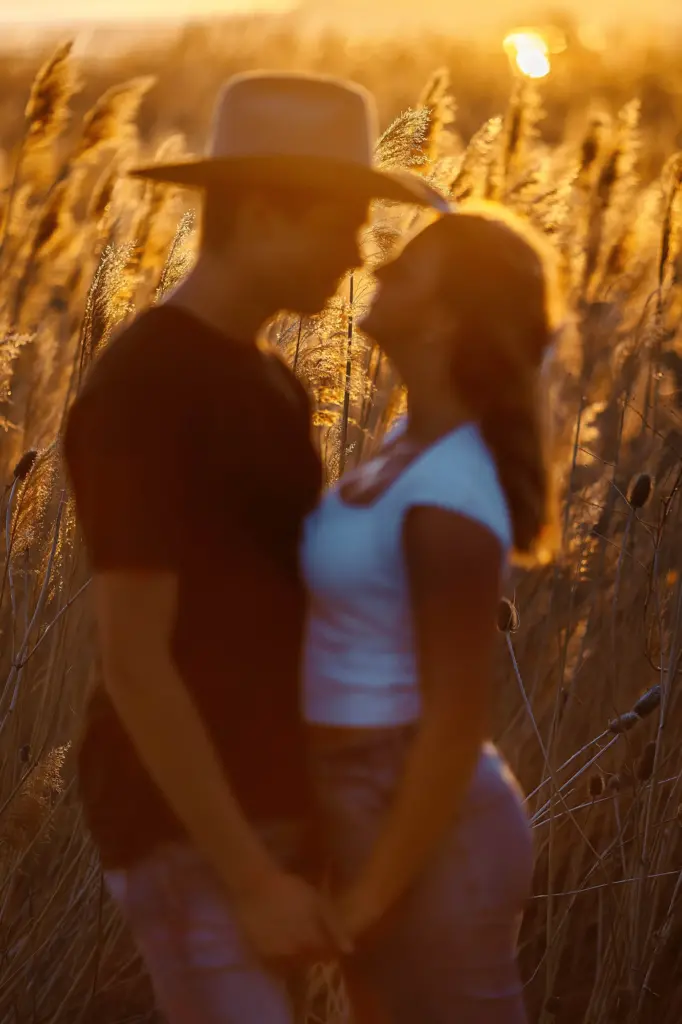
7. Adventure Elopement-Style Sessions. Full-day shoots covering multiple locations, incorporating hiking, driving, and exploration. The images tell a story across time and geography rather than capturing a single moment.
8. Digital + Film Hybrid Delivery. Couples receive a primary digital gallery plus a set of hand-processed film scans – two distinct visual languages from the same session, giving them materials for different uses (social media vs. printed albums).
Planning a great engagement session takes less effort than most couples expect – but the details you handle before the day determine how much you enjoy the day itself. Here’s exactly how to approach it.
Wear clothes that genuinely reflect how you dress in real life, one step up from your everyday. Solid colors and simple textures photograph better than busy prints. Bring two outfits – one casual, one elevated – and coordinate your color palettes with each other and with your location. Avoid matching outfits; aim for complementary tones instead.
Book your engagement session 6–10 months before your wedding date. If you plan to use engagement photos on your save-the-dates, you need them finished 8–10 months out. If timing is less critical, any point during your engagement works. The important thing is booking your photographer early – popular dates fill months in advance.
Most engagement sessions run 1 to 2 hours. That’s enough time for two outfit changes and one location, or one outfit across two nearby locations. Adventure or full-day sessions run 3–5 hours and cover multiple locations. For couples nervous about the camera, a longer session gives valuable warm-up time.
Engagement photo sessions typically range from $600 to $2,000 in most US markets, depending on session length, the photographer’s experience level, and what’s included (digital files, prints, albums). Many wedding photographers include an engagement session in their wedding packages. Always confirm what deliverables are included before booking.
The best location is one that feels meaningful to you as a couple – a place connected to your relationship – rather than the most scenic spot you can find. If you’re in Utah or the American West, Antelope Island, Albion Basin, Dead Horse Point, Zion National Park, and Big Cottonwood Canyon are among the most photographically rewarding options for outdoor sessions.
Most photographers deliver 50 to 100 edited images from a standard 1.5–2 hour session. Film sessions produce fewer images – typically 15 to 30 selects – because you’re shooting with finite rolls. Ask your photographer specifically what their delivery expectation is before signing your contract, as it varies significantly by photographer.
Engagement photos don’t need to match your wedding style, and many photographers actively recommend departing from it. Your engagement session is an opportunity to explore a different aesthetic, a location you couldn’t access on your wedding day, or a mood that’s more personal and relaxed than your wedding’s formality level. Use both opportunities differently.
Professional hair and makeup isn’t required, but it’s worth considering for your engagement session. Because these images will likely appear on your save-the-dates, website, and possibly framed in your home for decades, looking polished matters. Also: your engagement session is the perfect low-stakes opportunity to test a hair or makeup artist before your wedding day.
Yes – most photographers welcome dogs at engagement sessions, and they often make the images better. Dogs create natural movement and genuine smiles. Come prepared: bring a leash, treats, and a friend or family member who can manage the dog during shots that don’t include them. Confirm with your photographer and, if shooting in a park, with venue rules.
The 45–60 minutes before sunset – golden hour – produces the most flattering, romantic light for outdoor engagement sessions. For urban sessions, late afternoon light (4–6 PM) works well, transitioning into blue hour and ambient artificial light. Avoid mid-day sun, which creates harsh shadows and causes squinting.
Book 3–6 months before your ideal session date, minimum. For sessions during peak windows – fall foliage (late September–mid October in Utah), summer wildflowers (July), and the holiday season – book 6–9 months out. Popular photographers fill quickly, and desirable locations have limited permit availability.
Engagement photos are worth it for most couples for two specific reasons: they give you professional-quality images from one of the most meaningful periods of your life, and they allow you to build chemistry with your photographer before your wedding day. Couples who’ve had an engagement session consistently report feeling more relaxed and natural during their wedding photography.

BASED IN
UTAH
AVAILABLE WORLDWIDE
As a professional wedding photographer based in Provo, Utah, for over ten years, I’ve had the honor of capturing countless beautiful and heartwarming moments for families. I have seen everything from the birth of a new baby to graduation and everything in between. As someone who has always had a passion for photography, there is nothing more fulfilling than seeing my clients’ faces light up when they see their photos.